Asphalt Resurfacing and Overlays in Tyler, TX
If your asphalt is rough, faded and cracked but the ground under it is still solid, you may not need to tear it out. An asphalt overlay puts a fresh layer of hot mix over the old surface and gives you a smooth, uniform pavement again.
Our crews handle asphalt resurfacing in Tyler for driveways, private roads and parking areas. We look at the pavement first and tell you plainly whether an overlay will hold up or whether the area needs more than that.
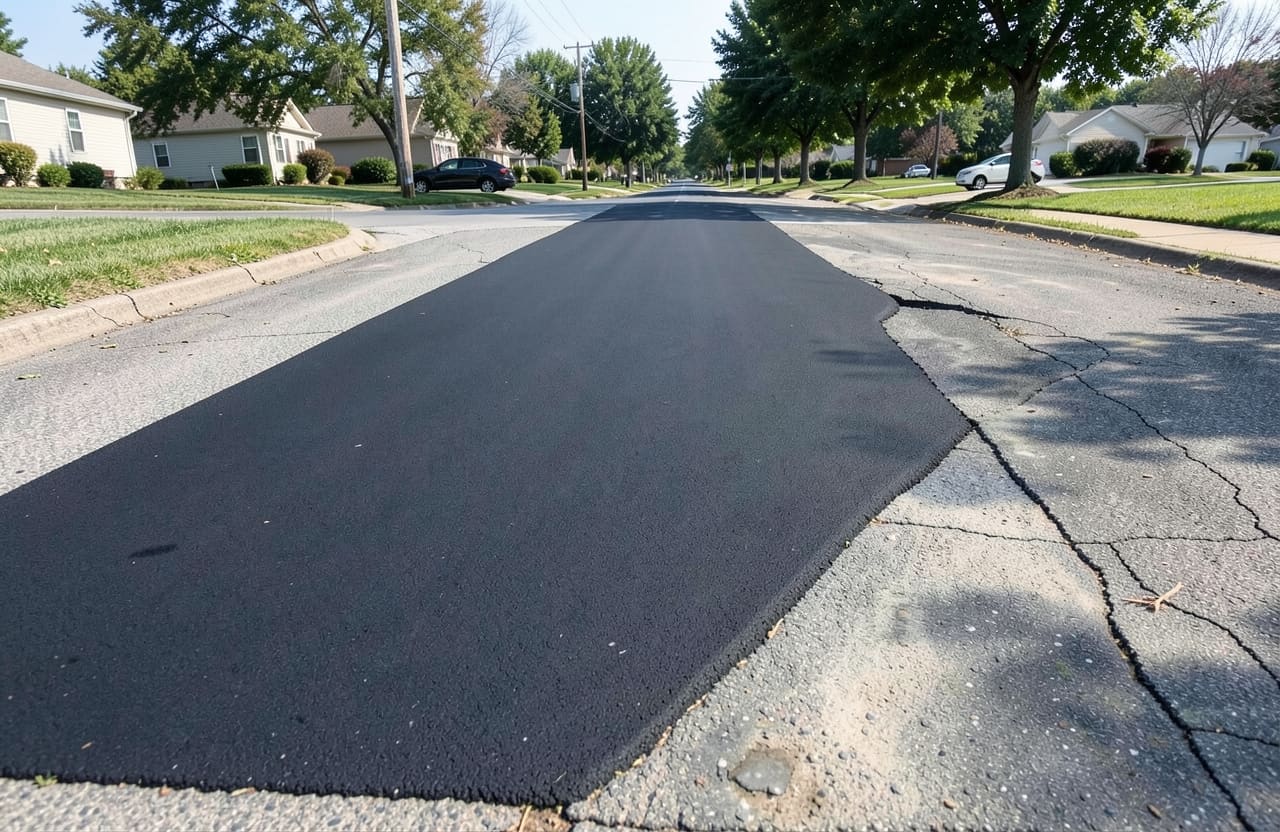
When do you need resurfacing, and when don't you?
Resurfacing works when the surface is worn out but the base underneath is still doing its job. The pavement is flat enough, drains reasonably well, and the damage is mostly on top.
An overlay is a good fit when you see:
- Fine cracking and rough, raveling texture across most of the surface
- Faded, gray pavement that sheds small stones
- Shallow low spots that we can level out during the overlay
- Old patches that have worn down unevenly
It is not the right fix when the base has failed. Deep ruts, sunken sections, and large areas of connected cracks that look like alligator skin mean water has softened the ground below. Paving over that only hides the problem for a short time. In those cases we cut out and rebuild the bad areas first, or recommend full replacement. For smaller damage, asphalt repair and patching may be all you need.
Signs your asphalt is ready for an overlay
Walk the pavement and look closely. These are the things we check first:
- Cracks that branch and spread. One hairline crack is a repair. Cracks across the whole surface point to an aging layer.
- Loose gravel and a rough feel. The binder has dried out and the stone is coming loose.
- Standing water after rain. Small birdbaths can often be built up. Large sunken areas usually mean a base problem.
- Crumbling edges. If the edges are breaking away, we may need to repair or widen them before paving.
- Patch on top of patch. When repairs outnumber good pavement, a new surface is usually more sensible.
If you are not sure which category you are in, we can look at it with you.
How Tyler's weather and soil affect resurfacing
Water is the main enemy of asphalt. Tyler gets about 42 inches of rain a year, and every crack lets moisture into the base. That is why we seal and repair cracks and set the overlay to drain, rather than just cover them up.
Heat and cold both play a part. The Tyler area sees about 98 days a year at 90°F or hotter, which dries out the binder in the surface and fades it over time. It also has about 29 nights a year at or below freezing, so water that got into a crack can freeze, expand and pry it wider.
The soils mapped around central Tyler have a low shrink-swell rating. They do expand when wet and shrink as they dry, but only a little, so the ground tends to move less than in some other parts of Texas. That helps an overlay last, though it does not replace good drainage or a sound base.
Age matters too. About half the homes in Tyler were built before 1980, and many driveways and lots from that era likely have been patched or resurfaced more than once. We check how the pavement has been built up over the years before we decide on a plan.
Our resurfacing process
1. Inspect and measure
We walk the pavement, check drainage and edges, and mark the areas that are failing at the base. We then explain our findings and what we recommend.
2. Repair the problem areas
Soft spots get cut out and rebuilt with new base and asphalt. Wide cracks are cleaned out and filled. Overlaying without this step lets old damage reflect up through the new surface.
3. Clean and apply a tack coat
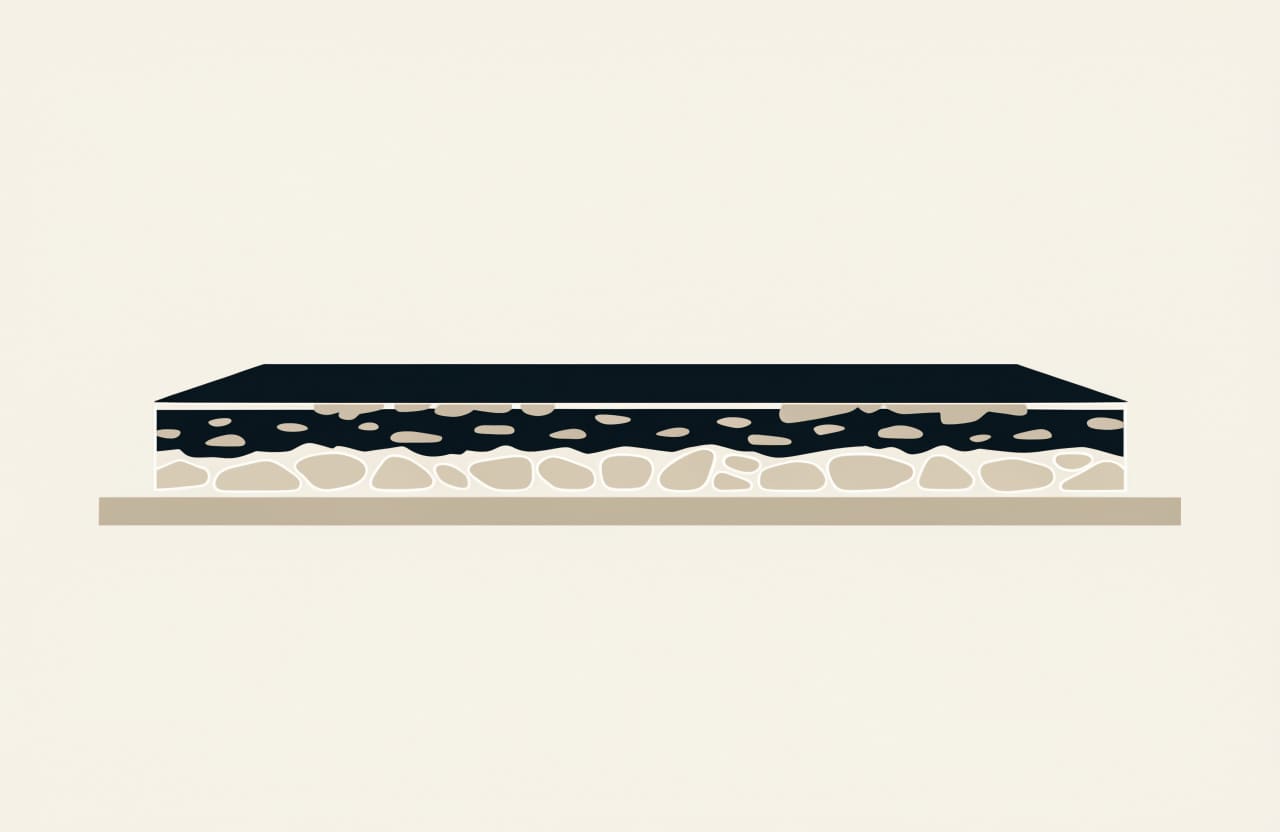
We sweep or blow off dirt, loose stone and debris. A thin tack coat of liquid asphalt then helps the new layer bond to the old one.
4. Lay and compact the overlay
Hot mix goes down at an even thickness, with low spots built up as needed so water runs off. We roll it while it is still hot so it compacts tightly and the surface is smooth.
5. Finish edges and clean up
We tie the new asphalt into driveways, aprons and curbs, check that water drains properly, and clean up. We will tell you how long to keep traffic off while it cools and firms up.
What affects the cost of an overlay
We price each job after we see it, because no two surfaces are alike. These are the main factors:
- Size of the area. More surface means more material and more crew time.
- Condition of the base. The more repair needed before the overlay, the more work the job involves.
- Thickness needed. Leveling low spots takes more asphalt than a uniform thin layer.
- Access. Tight driveways, gates and slopes affect equipment and how we work.
- Edges and transitions. Meeting garage floors, curbs and existing pavement can mean extra work.
- Extras. Striping, for example on a lot, is a separate step. See parking lot striping.
If the pavement is past saving, we will tell you, and we can talk through driveway paving or parking lot paving as a full replacement instead.
Questions about resurfacing and overlays
Here are the questions we hear most. You will find more on our questions page.
How long does an asphalt overlay last?
It depends on the shape of the base, how much traffic the pavement carries, and how well water drains off it. A sound base with good drainage gives you the best result. Regular maintenance helps too.
How thick is an overlay?
Usually a layer about 1.5 to 2 inches thick, though it depends on the surface and what it has to carry. We set the final thickness after looking at the pavement.
Can you overlay over cracks?
Small, stable cracks can be cleaned and filled first. Wide or moving cracks and failed areas need to be repaired properly, or they will show through the new surface.
Should I sealcoat a new overlay?
New asphalt needs time to cure first. Once it has, sealcoating can help protect it from sun and water, and we can advise on timing.
How soon can I drive on it?
Not right away. Fresh asphalt stays soft while it is hot, and the wait depends on the weather, so we will tell you when it is safe to use for your job.
Ready to talk it through?
Tell us about the job. No obligation.