Asphalt Driveway Paving in Tyler, TX
A good asphalt driveway in Tyler starts under the surface. Our crews prepare the ground, build a compacted stone base, and lay hot asphalt that is rolled to a smooth, tight finish with water running away from your house.
We pave new driveways, replace worn-out ones, and tell you honestly when a repair or overlay will do the job instead.
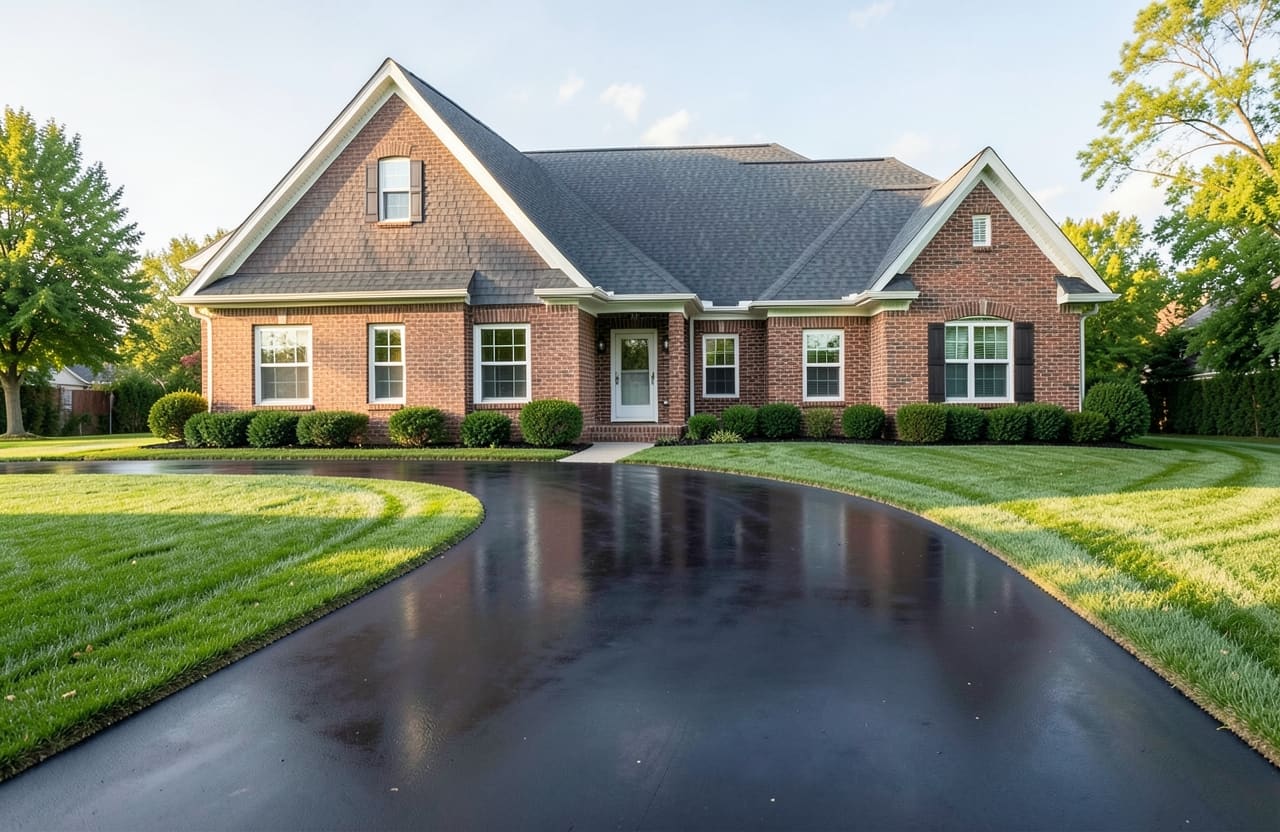
When do you need driveway paving, and when don't you?
Not every rough driveway needs to be torn out. If the base is still solid and the damage is on the surface, asphalt repair or an overlay can add years for less work.
Full driveway paving makes sense when the base has failed, the driveway never had a proper base, or you have a bare dirt or gravel drive and want a new asphalt driveway.
About half of Tyler's homes were built before 1980. Many Tyler driveways are decades old, so it's worth checking whether the base is still sound before paying for another patch.
Signs your driveway is ready for replacement
Walk the driveway and look for these:
- Alligator cracking, a web of small interlocking cracks that means the base underneath is giving way
- Sunken areas or ruts where tires always roll
- Water that pools and stays after a rain
- Crumbling edges where the asphalt meets the grass
- Potholes that keep coming back after patching
A few long, thin cracks are usually a maintenance issue. Widespread cracking and sinking usually means the base needs to be rebuilt.
How Tyler's weather and soil affect your driveway
Tyler gets about 42 inches of rain a year. Water is what breaks driveways down, so we set the grade and crown so water sheds off the surface and away from your foundation instead of sitting on the pavement or soaking the base.
Summers are hard on asphalt too. The area sees about 98 days a year at 90°F or hotter, and hot asphalt softens. That's why thickness and compaction matter, and why we suggest putting a board under a trailer jack or kickstand.
We also get about 29 freezing nights a year. Water that gets into a crack can freeze, expand and widen it, so we recommend sealing cracks early.
Soil around central Tyler has a low shrink-swell potential. It does expand a little when wet and shrink as it dries, so it is gentler on pavement than some clay in the region. We still dig out soft spots and compact the base, because the ground is only as good as the weakest patch under it.
Our driveway paving process
Every driveway is a little different, but the steps are the same.
1. Measure and plan
We walk the site, measure the area, check where water flows, and talk through the width, shape, and where the driveway meets the street. You get a written quote.
2. Remove and grade
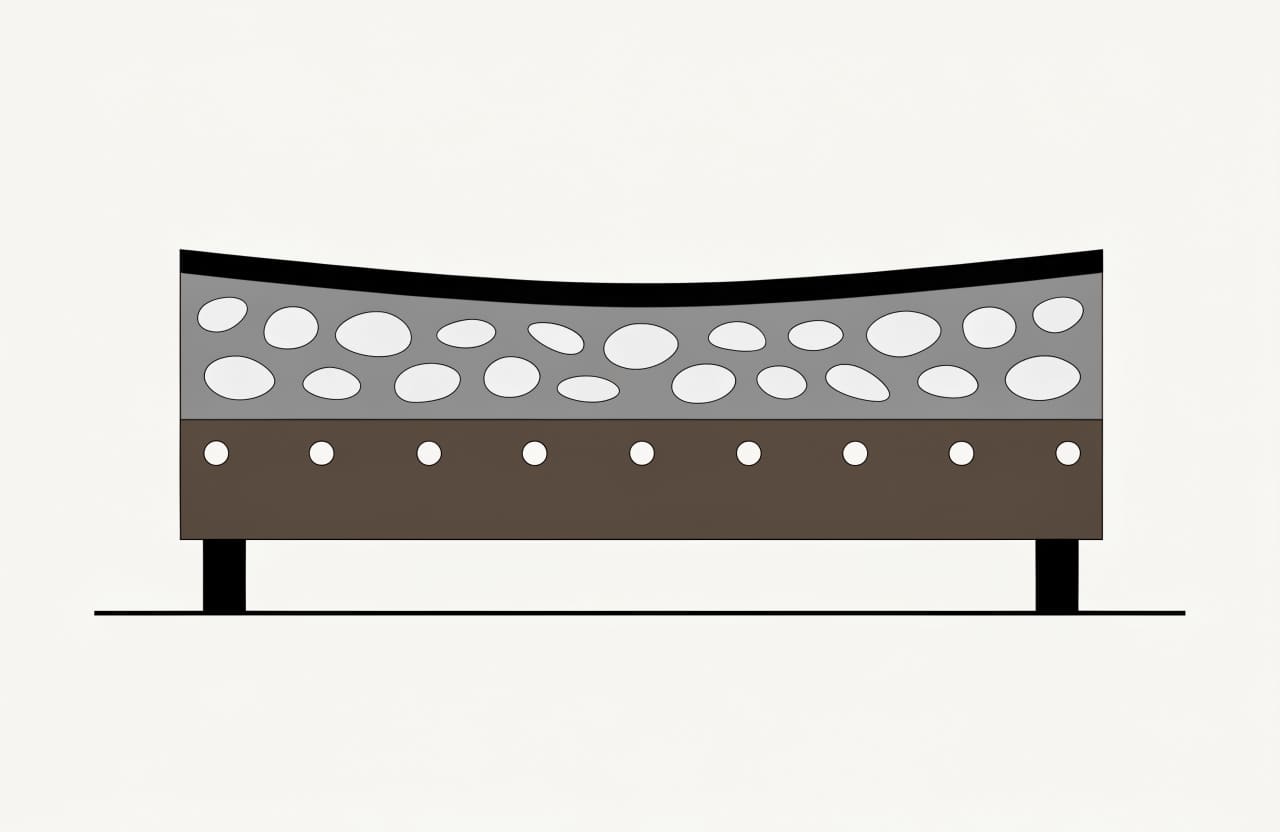
We remove the old driveway or the top layer of soil, then grade to the right slope. Soft or wet spots get dug out and fixed now, not after paving.
3. Build the base
We spread crushed stone in layers and compact it with a roller until it's firm. This base carries the load and is the biggest factor in how long the driveway lasts.
4. Lay and roll the asphalt
Hot asphalt goes down at an even thickness and is rolled while it's still workable. We take care with edges and with the joint at the garage and street.
5. Clean up and cure
We clean up and tell you how long to keep cars off it. New asphalt stays soft for a while in summer heat, so we tell you what to avoid in the first days.
What affects the cost of an asphalt driveway
We don't quote by phone or by the foot, because two driveways of the same size can need very different work. These are the main factors:
- Size: length times width gives square footage, and the amount of asphalt and stone goes up with it
- Whether old pavement has to be removed and hauled away
- Condition of the ground and how much base work it needs
- Thickness of the base and asphalt, which depends on what will drive on it
- Drainage, slope, and any culverts or tie-ins to the street
- Access for trucks and equipment
Once we've measured, we give you a clear quote for your driveway.
Questions about driveway paving
How much would a 20x20, 20x40 or 100 ft asphalt driveway cost?
A 20x20 driveway is 400 square feet and a 20x40 is 800. A 100 ft driveway depends on its width: at 12 feet wide it's 1,200 square feet. Bigger areas take more material and more time, but the base, drainage and tear-out matter just as much. We'd rather measure than guess, so request a quote and we'll give you a number for your actual driveway.
Is sealing a blacktop driveway pointless?
Not pointless, but it's not a must-do either. Sealcoat is a thin protective layer. It slows sun and water damage, but it does not add strength or fix a weak base, and it won't stop cracks that come from underneath. On a sound driveway, it can help the surface last longer in the heat. On a failing driveway, it's a waste. See our sealcoating page, or ask us and we'll tell you whether yours would benefit.
Do you pave driveways outside Tyler?
Yes. We also serve nearby towns, including Hawkins, Jacksonville and Chandler. More answers are on our questions page.
Ready to talk it through?
Tell us about the job. No obligation.