Parking Lot Striping in Tyler, TX
Faded lines make a lot harder to use. Drivers park crooked, fire lanes disappear, and accessible spaces stop being clear. Our crews handle parking lot striping in Tyler for shops, churches, apartment complexes, offices and medical buildings.
We lay out the stalls, mark the lanes and arrows, and paint every line straight and sharp. Here is how to tell when your lot needs it, what the weather does to paint, and how the job goes.
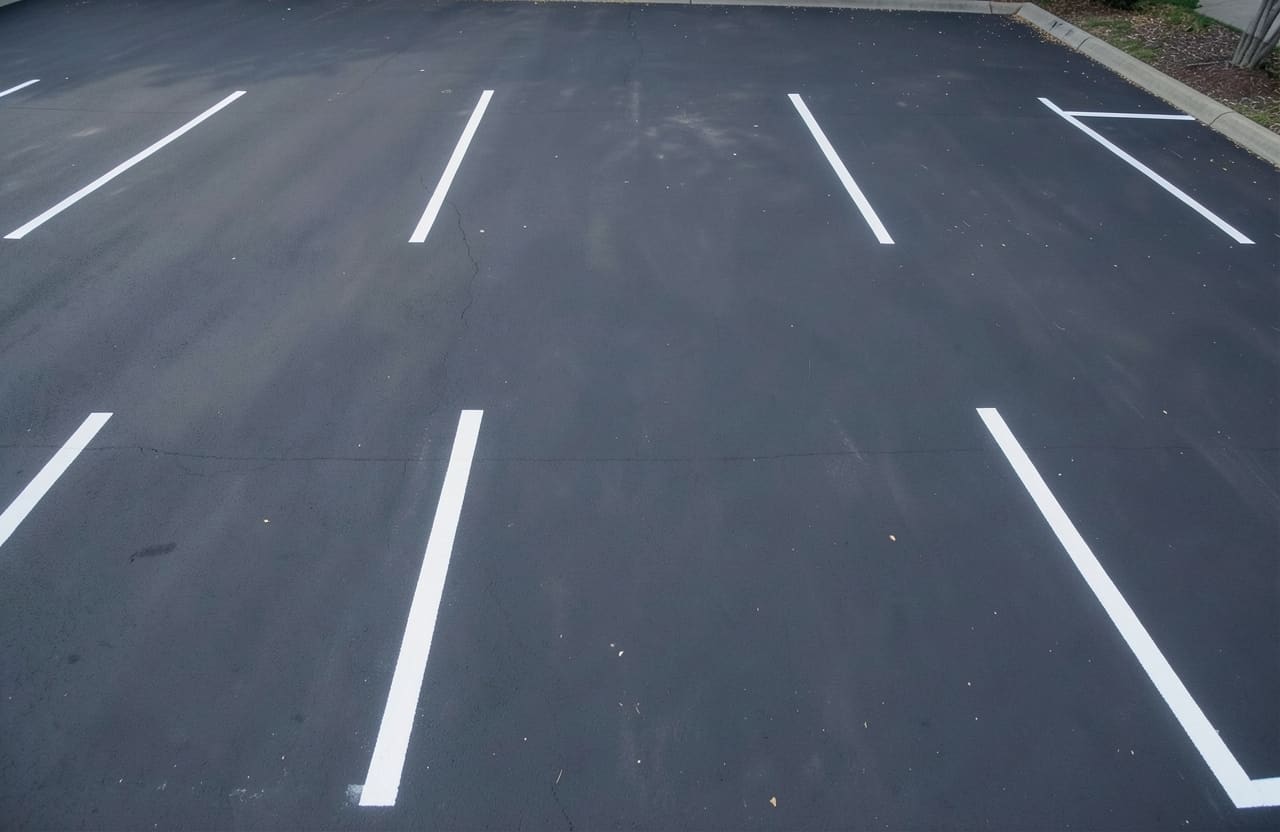
When do you need parking lot striping (and when don't you)?
Most lots need restriping when the lines have faded to the point that a driver can't see them at a glance, especially in the evening. Heavy traffic wears paint faster at entrances, turn lanes and the stalls closest to the door.
You may not need it yet if the lines are still bright and the layout still works for your business. If the pavement itself is failing, though, paint is the wrong first step. Lines painted over crumbling asphalt wear off quickly, so we look at the surface before we recommend anything.
Signs your lot is due for new lines
Walk the lot and look for these:
- Stalls where the paint is patchy or gone, so cars drift over the edges
- Faded arrows, stop bars, crosswalks or fire lane markings
- Accessible spaces and symbols that are hard to make out
- Cars parking at angles or blocking drive aisles
- Lines that flake off in sheets signal built-up, old paint or poor bonding
- A recent patch, overlay or sealcoating job that covered the old markings
If you're not sure, tell us what you're seeing, and we'll work together to figure out the best plan for your lot.
How Tyler's weather and soil affect striping
Paint on asphalt takes a beating here. The Tyler area sees about 98 days a year at or above 90°F, and hot pavement softens and gets scuffed by tires, which wears lines down. We schedule striping for dry, mild days so the paint bonds and cures properly.
Rain matters too. Tyler averages about 42 inches a year, and standing water and wet weather keep paint from sticking. A lot has to be fully dry before we start, and low spots that hold water tend to lose their lines first.
The area also gets about 29 nights a year at or below freezing. Water that gets into cracks and freezes can open them wider, and cracks running through a painted line break it up. Soils around central Tyler swell a little when wet and shrink as they dry, though the movement is low. Low shrink-swell soils mean less soil movement under the pavement, but cracks and settled spots still happen, so the lot should be checked before painting.
Our striping process
Every lot is different, but the steps are the same.
1. Walk the lot and measure
We check the surface, measure the lot and note what's already marked. If you want the same layout, we follow it. If you want to add stalls, change traffic flow or add loading zones, we sketch that out with you first.
2. Clean the surface
Dirt, sand, leaves and loose paint keep new lines from bonding. We sweep and blow the lot clean and scrape or clear problem areas. Oil spots may need extra attention.
3. Lay out the lines
We mark the layout with chalk lines and measuring tape, or with stencils for arrows, symbols and lettering. Layout is where a striping job is won or lost, because a crooked guide line stays crooked.
4. Paint
We apply traffic paint with striping equipment for even, straight lines, and hand-paint curbs, symbols and tight areas. We mark to your existing layout or the specs you provide. It's important to confirm ADA and fire-marshal requirements for your property, as the rules differ per jurisdiction.
5. Cure and reopen
We cone off the fresh paint and reopen sections as they dry. Drying time depends on the paint and the temperature that day, so we tell you when it's safe to drive and park.
What affects the cost of parking lot striping
We don't quote without seeing the lot or a clear description. These things move the number:
- Lot size and the number of stalls
- Whether we're repainting an existing layout or designing a new one
- Extra markings such as arrows, crosswalks, curbs, fire lanes and stencils
- How much old paint needs to be removed or covered
- Surface condition, since cracks or potholes should be fixed first with asphalt repair
- Access and timing, such as working around business hours
If striping goes with other work, doing it together is often simpler. See parking lot paving and resurfacing and overlays.
Questions about parking lot striping
Here are the ones we hear most. More answers are on our questions page.
How long do painted lines last?
It depends on traffic, sun, water and the condition of the pavement underneath. Busy entrances wear out first, while quiet back stalls can last much longer. A lot with lots of heat and rain will usually need fresh lines sooner than a covered one.
Should lines be painted before or after sealcoating?
After. Sealcoating covers the old markings, and the new lines go on once the sealer has cured. Planning both together can help limit disruption. Ask us about scheduling.
Can you stripe over cracks and potholes?
We don't recommend it. Paint over damage hides the problem for a short time and then wears away with the pavement. We repair first so the new lines last.
Can you change the layout?
Yes. We can add stalls, mark loading zones, or change traffic direction. If the old lines are in the way, we cover or remove them first so drivers aren't confused by ghost markings.
Ready to talk it through?
Tell us about the job. No obligation.