Sealcoating in Tyler, TX
Sealcoating is a thin protective coat over asphalt that keeps out water, sun and oil. Done at the right time, it slows the wear that leads to cracks and potholes. Done at the wrong time, it's wasted money.
We do asphalt sealing for driveways and commercial lots around Tyler. Before we recommend it, we look at the pavement and tell you whether it will help.
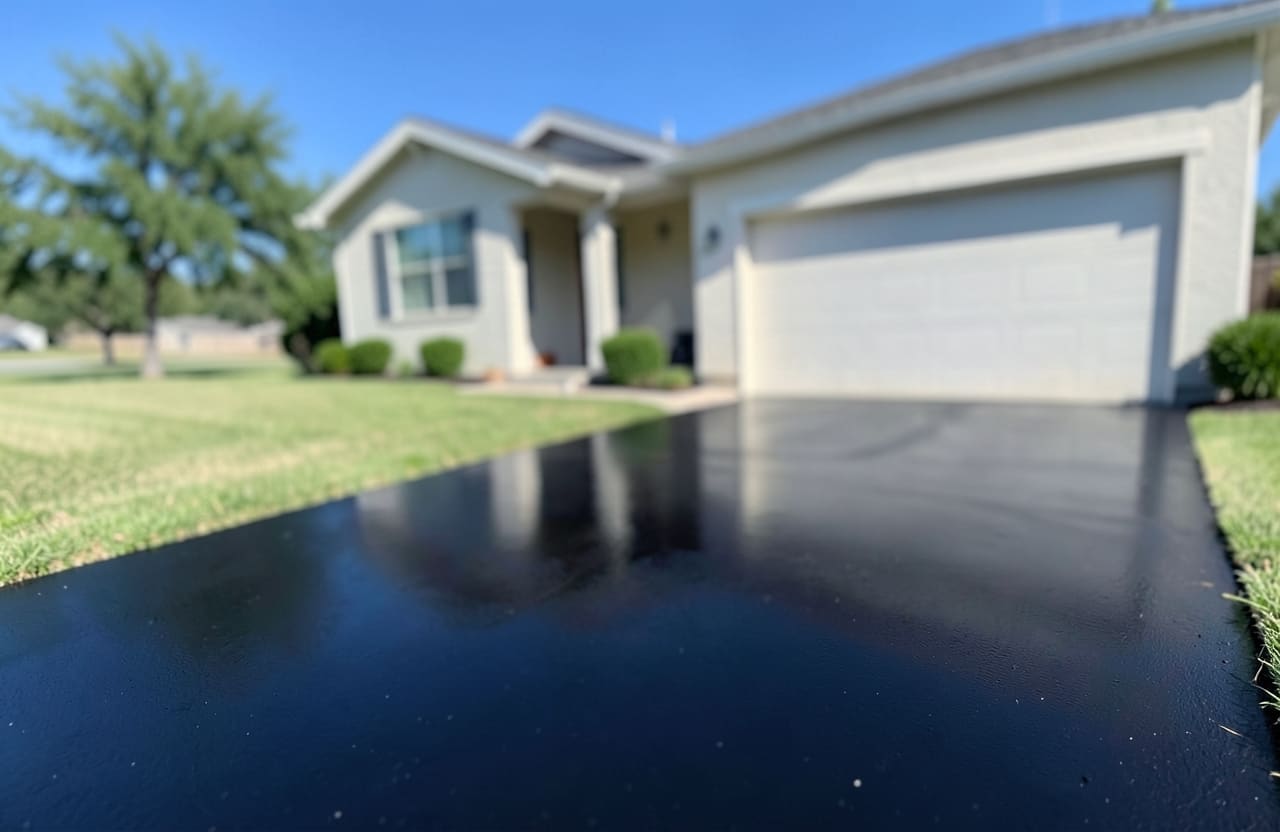
When do you need sealcoating, and when don't you?
Sealcoating works on pavement that is still structurally sound but starting to age. The surface looks faded and gray, and the top layer is wearing thin. A fresh coat protects what's there.
It does not work on pavement that is already failing. Sealer is a surface film, not a structural repair. It won't fill deep cracks, level sunken spots, or hold up a weak base.
Good candidates
- Asphalt that is a year or more old and has faded from black to gray
- Surfaces with only hairline cracks
- Driveways and lots with oil or fuel staining that needs sealing in
- Pavement you want to keep looking sharp before it needs real work
Poor candidates
- Pavement with potholes, sunken areas or crumbling edges: start with asphalt repair
- Surfaces covered in alligator cracking, which means the base has failed: look at resurfacing or replacement
- Brand-new asphalt, which needs time to cure before it's sealed
Why is sealing your blacktop driveway sometimes called pointless?
You may have heard that sealing a blacktop driveway is pointless. Sometimes it is, and here is why.
If the driveway is cracked through, sinking, or breaking up from below, a coat of sealer only hides the problem for a season. It also won't turn a worn-out driveway into a new one. And if it's sealed too early or too often, you're paying for a cosmetic coat the pavement didn't need.
On sound asphalt, though, sealing does real work. It shields the surface from water and sun, which is what breaks pavement down over time. The point is to seal the right driveway at the right time. If yours needs something else, we'll say so.
What signs show asphalt needs sealing?
Walk your driveway or lot and look for these:
- Color has faded from deep black to dull gray
- The surface feels rough, and loose stone or grit shows up
- Fine hairline cracks are spreading
- Water soaks in instead of beading and running off
- Oil spots have softened the surface
If you see wider cracks, soft spots or edges breaking off, the pavement needs repair first. Sealing comes after.
How do Tyler's weather and soil affect sealcoating?
Sun and water do most of the damage to asphalt here. Tyler gets about 98 days a year at 90°F or hotter. That heat dries out the binder in asphalt and fades the surface, which is exactly what sealer slows down.
Rain
The Tyler area averages about 42 inches of rain a year. Water that gets into small cracks weakens the base underneath, so keeping the surface sealed and the cracks filled matters. We also pay attention to how water drains off your pavement, because standing water shortens the life of any coating.
Freezing nights
We see about 29 nights a year at or below freezing. Water in a crack that freezes expands and pushes the crack wider. It's not a Minnesota winter, but it's enough to open up cracks that aren't sealed.
Soil and older pavement
Soils around central Tyler have a low shrink-swell potential. They still expand when wet and shrink as they dry, but they move less than heavy clay does. That's good for pavement, though it doesn't mean the ground never causes cracks. About 53% of Tyler homes were built before 1980; some of the driveways for these homes may be original and worth checking for maintenance, repair, or replacement.
What is our sealcoating process?
Good sealcoating is mostly preparation. The coat only sticks and lasts if the surface underneath is clean and sound.
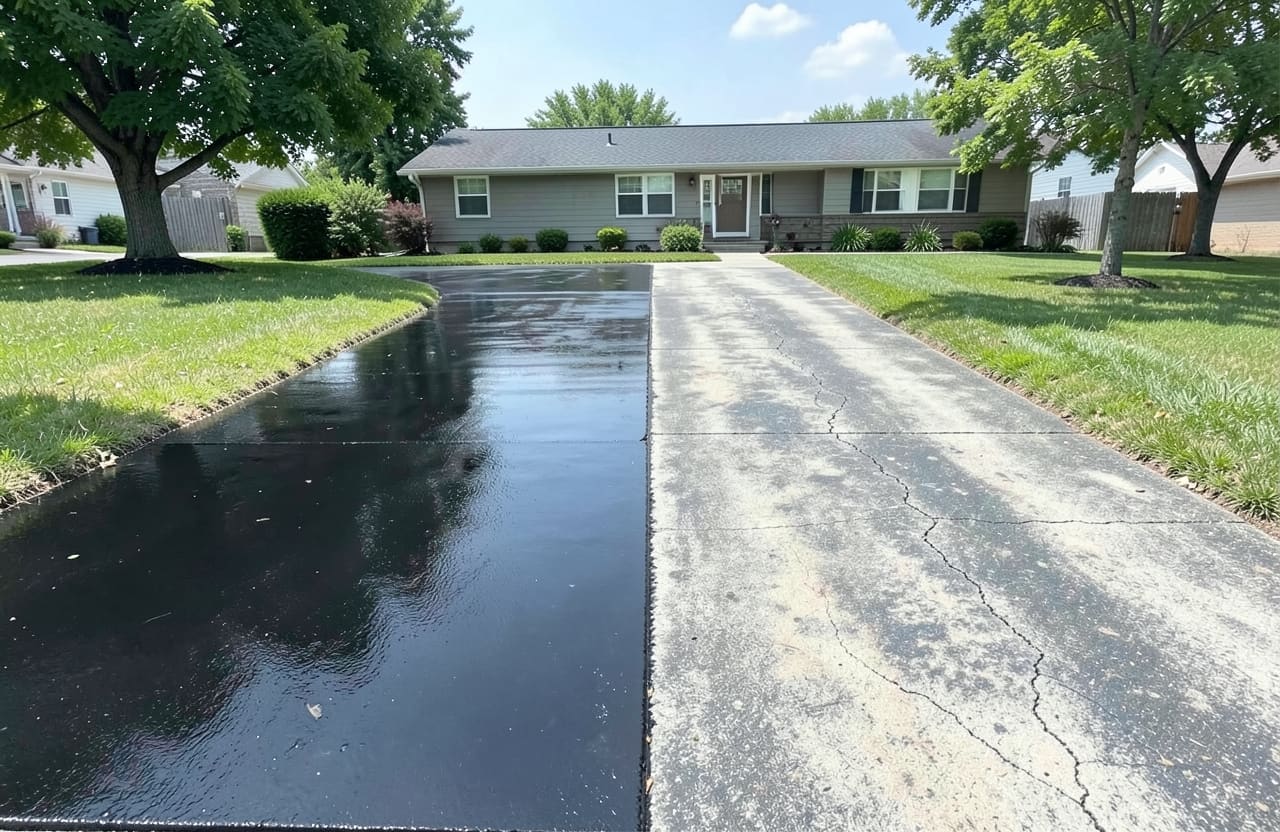
1. Inspect the pavement
We walk the surface and decide whether sealing is the right fix. If the base is failing, we tell you before anything is applied.
2. Clean the surface
We clear off dirt, leaves and loose debris with blowers and brooms, and wash off residue where needed. Sealer won't bond to dust.
3. Treat oil spots and fill cracks
Oil stains get a primer so they don't bleed through. We fill cracks that are wide enough to need it with a rubberized crack filler so water has fewer ways in.
4. Apply the sealer
We apply the sealer in even coats, working to the edges. We cut in along curbs and garage doors by hand so the lines stay clean.
5. Let it cure
We block off the area until the sealer has dried. Sealing needs dry weather and mild temperatures, so we schedule around forecasts. We'll tell you when you can walk and drive on it. If your lot needs lines, we can repaint them afterward with parking lot striping.
What affects the cost of sealcoating?
The price of a job comes down to a few things:
- Total square footage of pavement
- Condition of the surface and how much crack filling it needs
- Oil stains that need priming
- Access, such as tight driveways or lots with many obstacles
- Whether one or two coats are called for
The fastest way to get a firm number is to request a quote. We look at the pavement and give you a clear answer on both scope and cost.
Common questions about sealcoating
A few things homeowners and property managers ask us most.
How often should asphalt be sealed?
Typically every few years, depending on how much sun, traffic and water the pavement gets. A shaded driveway may go longer than a lot baking in full sun all day.
How long before I can drive on it?
It depends on temperature, humidity and how thick the coat is. We'll give you a time for your specific job, and it's best to stay off until we say it's ready.
Should I seal a new driveway?
Not right away. Fresh asphalt needs time to cure first. If you're planning a new surface, take a look at our driveway paving or parking lot paving pages.
Can sealcoating fix a cracked driveway?
It can protect small cracks once they're filled, but it can't repair a driveway that's cracking from a weak base. In that case, repair or resurfacing is the better move.
Ready to talk it through?
Tell us about the job. No obligation.